
OpenAI's IPO Delay: What It Means for AI Stocks
6/26/2026

The OpenAI IPO delay is the biggest story in markets this week. Bankers are reportedly steering the ChatGPT maker toward a 2027 listing instead of late 2026, and the ripple effect is hitting every AI stock from Nvidia to Oracle. Here is what the delay actually means for your portfolio.
What Happened: OpenAI Pumps the Brakes
On June 8, 2026, OpenAI confidentially submitted a draft S-1 registration statement to the Securities and Exchange Commission, the first formal step toward a stock-market debut. At the time, the company signaled it could list as early as the fourth quarter of 2026, which would have made it one of the most anticipated technology IPOs in history.
That timeline just slipped. On June 25, a New York Times report said OpenAI is now leaning toward waiting until 2027, with bankers advising the company that the moment is not right. The OpenAI IPO delay instantly became the dominant narrative in an already-jittery market, helping push the Nasdaq to its fifth straight losing session.
Nothing is final. A confidential filing gives a company the flexibility to move its timeline, and OpenAI has not formally withdrawn anything. But the shift in tone matters, because the market had started to price an imminent listing into the entire AI complex.
The reported decision tree
According to the reporting, executives have framed the choice as two options: wait until next year and aim for a trillion-dollar-plus debut, or go sooner at a lower figure. Altman has reportedly drawn a hard line, calling anything under $1 trillion a non-starter. In other words, the delay is less about whether OpenAI can go public and more about the price it is willing to accept.
Prediction markets reflect the uncertainty. As of late June, traders on Kalshi placed only about one-in-three odds that an IPO is even announced before January 1, while giving roughly a 73% chance of an announcement by June 2027.
Why Is OpenAI Delaying Its IPO?
A company does not pause the largest tech IPO of the decade on a whim. Three forces appear to be driving the OpenAI IPO delay, and each one tells you something about the state of the AI trade right now.
1. The SpaceX hangover
The most-cited reason is the brutal post-IPO performance of SpaceX (SPCX). Elon Musk's rocket and AI venture pulled off the largest IPO ever in June 2026, then watched its stock whipsaw violently, hitting a post-listing high of $202 on June 16 before sliding back toward $151. Bankers reportedly worry that a second high-profile mega-listing landing in a soft tape could repeat the experience and burn the retail investors a deal of this size depends on.
2. AI-stock volatility
The broader AI group has been under pressure. Chip and infrastructure names sold off through late June, and the report of OpenAI's own hesitation became a self-reinforcing signal: if the marquee AI company does not want to price in this market, why should investors pay up for its suppliers? This is the same anxiety we unpacked in our look at whether the AI trade is cracking.
3. The trillion-dollar question
Altman's reported $1 trillion floor collides with the reality that OpenAI's last private round valued it near $852 billion. Closing that gap in a weak market is hard, and pushing the listing into 2027 buys time for revenue to grow into the valuation. It is a bet that patience is cheaper than a discounted debut.
OpenAI by the Numbers
To understand why the delay is so contentious, you have to look at OpenAI's financial profile. It is one of the fastest-growing companies ever built, and also one of the most cash-hungry. Both things are true at once.
| Metric | Latest figure (2026) | Why it matters |
|---|---|---|
| Last private valuation | ~$852 billion | Set in a March 2026 round (~$122B raised, led by SoftBank and Microsoft) |
| Altman's IPO floor | $1 trillion+ | The reported reason a discounted 2026 debut is off the table |
| Revenue run-rate | ~$24 billion annualized | About $2 billion per month as of Q1 2026, growing fast |
| Estimated annual cash burn | ~$27 billion | No company has justified a trillion-dollar tag while burning this much |
| Confidential S-1 filed | June 8, 2026 | Opened the door to a Q4 2026 listing that is now slipping to 2027 |
The tension is obvious. A revenue run-rate near $24 billion would already rank OpenAI among the largest software businesses on earth, but a roughly $27 billion annual burn means it is spending more than it earns to fuel growth. Public-market investors are far less forgiving of that math than private backers have been, which is exactly why timing the debut into a strong tape matters so much.
The SpaceX Warning Shot
If you want to know what spooked OpenAI's bankers, look at the most recent mega-IPO. SpaceX raised roughly $75 billion on June 12, 2026, selling 555.6 million shares at $135 each, the largest initial public offering in history. The stock popped 19% to close its first day near $161, briefly valuing the company around $2.2 trillion.
Then gravity took over. After peaking at $202 on June 16, shares unwound hard, trading near $151 by late June. We broke down the listing in detail in our SpaceX IPO valuation analysis, and the post-debut volatility is precisely the cautionary tale now hanging over OpenAI.
The lesson is not that mega-IPOs fail. It is that a thin float plus sky-high expectations equals violent price swings, and no issuer wants its debut to become the next example. A 2027 listing gives OpenAI a chance to launch into calmer conditions, assuming they arrive.
The Circular Financing Web
Here is the part that should matter most to public investors, and the real reason the OpenAI IPO delay moves AI stocks: OpenAI is not an isolated private company. It sits at the center of a dense web of supply-and-financing deals with the largest names in semiconductors and cloud. When OpenAI sneezes, its public partners catch a cold.
| Partner | The deal | Scale |
|---|---|---|
| Nvidia (NVDA) | Invests in OpenAI (non-voting) while OpenAI commits to deploying Nvidia systems | Up to $100B investment, ~10 gigawatts of compute, first Vera Rubin deployment in H2 2026 |
| Oracle (ORCL) | OpenAI commits to multi-year cloud spending as part of the Stargate build-out | ~$60B per year for five years (2027-2031), ~$300B total |
| AMD (AMD) | OpenAI receives warrants for AMD stock in exchange for buying Instinct GPUs | Warrants for up to ~160M shares; ~6 gigawatts of GPUs, first 1GW in H2 2026 |
| Microsoft (MSFT) | Largest strategic backer, cloud provider, and co-investor | Co-led the ~$122B March 2026 round; deep Azure compute ties |
Why "circular" is the keyword
Notice the pattern. Nvidia invests in OpenAI, and OpenAI uses that money to buy Nvidia chips. AMD hands OpenAI warrants worth billions, and OpenAI commits to buying AMD GPUs. Cash flows out of the chipmakers and back to them as revenue. Critics call this circular financing, and it has become the central worry of the so-called AI bubble debate: are these real, independent orders, or are suppliers effectively funding their own demand?
The scale is staggering. Hyperscalers including Amazon (AMZN), Alphabet (GOOGL), Meta (META), and Microsoft are guiding toward a combined $635 billion to $690 billion in 2026 capital spending, a 67% to 74% jump over 2025. Nvidia captures an estimated 90% of AI accelerator spending. The debt financing behind the build-out reportedly reached $108 billion in 2025 and could swell toward $1.5 trillion over time.
An OpenAI IPO would have validated that ecosystem with a public market stamp of approval and fresh capital. Delaying it leaves the circular structure intact but unvalidated, which is why suppliers wobble on the headline.
Which AI Stocks Are Most Exposed?
You cannot buy OpenAI, but you can buy the companies tied to it. That makes the public AI proxies the real battleground whenever OpenAI's plans shift. Here is how to think about the exposure.
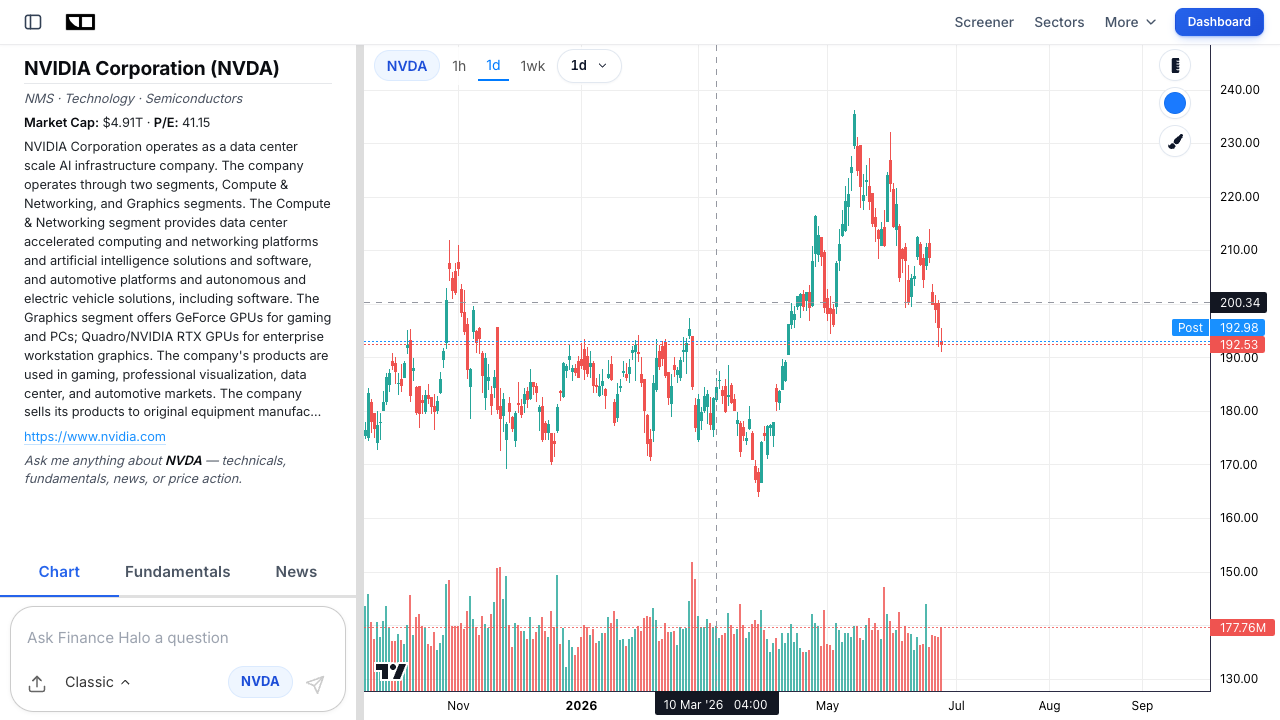
- Nvidia (NVDA): The most direct proxy. As both an OpenAI investor and its primary chip supplier, NVDA trades on every signal about AI compute demand. Its valuation already prices in years of growth, so headlines about a buyer pausing matter.
- Oracle (ORCL): The cloud whose backlog leans heavily on the OpenAI/Stargate commitments. A multi-year, ~$300B obligation is a huge tailwind, but it also concentrates customer risk.
- AMD (AMD): The challenger whose AI narrative got a major boost from the OpenAI GPU and warrant deal. Sentiment here is tightly linked to OpenAI follow-through.
- Broadcom (AVGO): A custom-silicon and networking giant. Less directly tied to OpenAI, but a key beneficiary of the same hyperscaler capex wave. We covered a related name in our Marvell Technology deep dive.
- Microsoft (MSFT): The safest proxy. As OpenAI's largest backer and cloud host, MSFT captures upside while its diversified business cushions any single setback.
- Micron (MU): The memory supplier riding the AI build-out. MU actually jumped about 15% after a blowout earnings report on June 24, a reminder that strong fundamentals can still cut through the noise. See our guide to the AI memory bottleneck for why.
The takeaway: the closer a company's revenue is to OpenAI specifically, the more its stock reacts to OpenAI headlines. The more diversified the business, the more insulated it is.
A Shaky Market Backdrop
The OpenAI IPO delay did not land in a vacuum. It hit a market that was already rotating out of high-growth tech. On June 26, the Nasdaq Composite finished its fifth straight losing session, closing near 25,298 and falling roughly 4.6% on the week. The S&P 500 slipped about 2% on the week to around 7,354, while the Dow Jones Industrial Average actually rose about 0.6%, a textbook rotation toward defensives.
Macro pressure made it worse. The May personal consumption expenditures (PCE) report showed headline inflation running at a 4.1% annual rate, the hottest since April 2023, with core PCE at 3.4%, just above the 3.3% forecast. Markets responded by pricing in roughly a 70% chance of a Federal Reserve rate hike by September, an unusual and hawkish setup that pulls liquidity away from speculative growth names.
When inflation is sticky and the Fed is leaning hawkish, the highest-multiple, longest-duration assets get hit first, and nothing is longer-duration than a pre-profit AI company. That context explains why a single report about one private company's timeline could move the whole sector. To see how sentiment and sector rotation are shifting in real time, check the daily AI-generated market intelligence report.
What History Says About Mega-IPOs
Is a delayed IPO actually bad? History offers a nuanced answer. The biggest listings of all time have a mixed record, and the lesson for OpenAI is more about price discipline than timing.
| Company | Year | Amount raised | What happened next |
|---|---|---|---|
| SpaceX (SPCX) | 2026 | ~$75 billion | Largest ever; popped 19% then turned highly volatile |
| Saudi Aramco | 2019 | ~$25.6 billion | Prior record holder; relatively stable mega-cap |
| Alibaba (BABA) | 2014 | ~$21.7 billion | Largest US IPO at the time; volatile long-term path |
| Rivian (RIVN) | 2021 | ~$11.9 billion | Peaked near $86B day one, later collapsed toward ~$14B |
Rivian is the cautionary tale that should haunt any IPO banker. It debuted into a frothy market, briefly reached a market cap near $86 billion on day one, and then shed the vast majority of that value as enthusiasm faded and fundamentals took over. Pricing a hyped story into a weak or euphoric tape is how you create that kind of round trip. Avoiding it is arguably what the OpenAI delay is really about.
What the Delay Means for Investors
So how should a retail investor actually respond? The honest answer is that the OpenAI IPO delay changes very little about what you can buy today, but it should change how you think about the AI complex.
You still cannot buy OpenAI directly
Until OpenAI lists, there is no clean, regulated way to own the shares. Pre-IPO funds and special purpose vehicles (SPVs) exist, but they often charge steep premiums and carry liquidity and disclosure risks. For most investors, the practical exposure runs through public proxies.
Trade the ecosystem, not the rumor
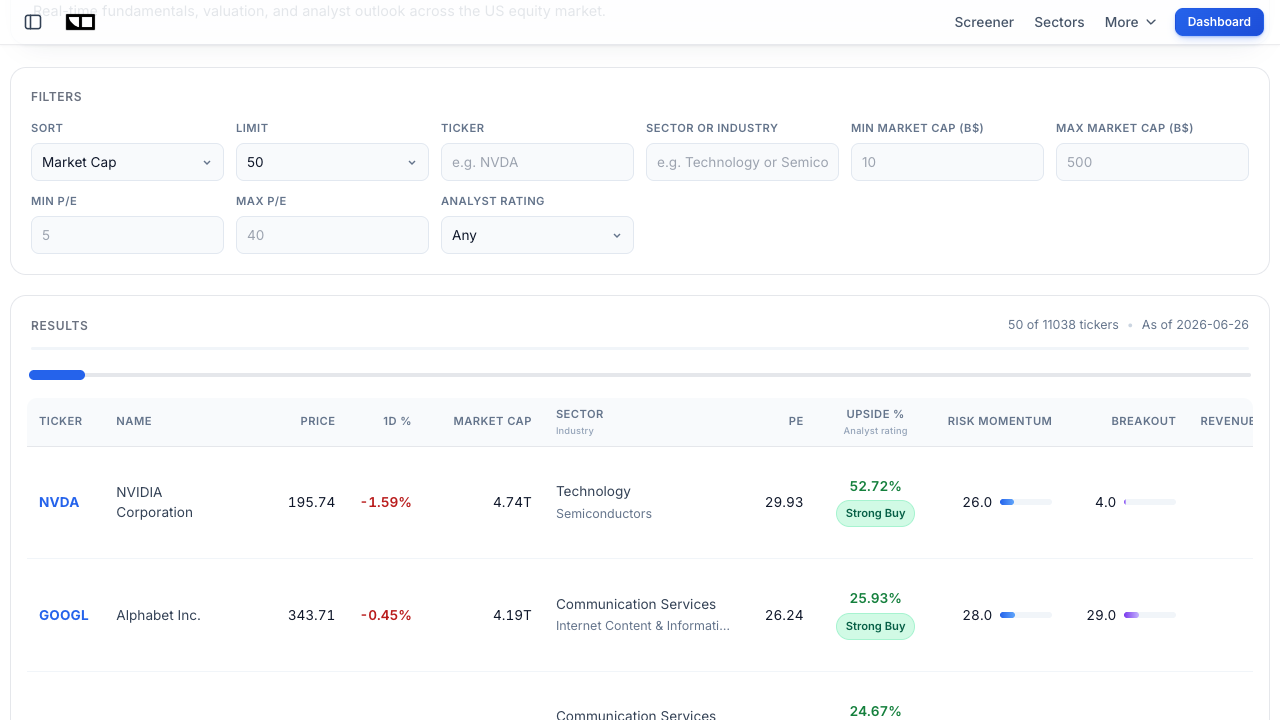
The public names tied to OpenAI, from Nvidia and AMD to Oracle and Microsoft, give you exposure to AI demand without betting on a single IPO date. The key is to value them on their own fundamentals rather than on OpenAI headlines. That means looking at revenue growth, margins, and forward earnings multiples. Our explainer on forward versus trailing P/E is a good starting point, and you can screen these names directly with the Finance Halo market screener.
Mind the circular-financing risk
The biggest structural risk is that AI demand turns out to be more interdependent than it looks. If suppliers are partly funding their own customers, a slowdown at one node, like a cash-constrained OpenAI, can cascade through the chain. Position sizing matters: own the theme, but do not bet the portfolio on any one link.
Real-World Example: The AI Proxy Basket
Imagine an investor, Maria, who wants OpenAI exposure but knows she cannot buy the shares. Instead of chasing a pricey pre-IPO SPV, she builds a small, diversified basket of public proxies and sizes each one to its risk.
She splits a hypothetical $10,000 allocation across four names: $4,000 in Microsoft as the diversified anchor, $3,000 in Nvidia as the core compute play, $2,000 in Oracle for the Stargate backlog, and $1,000 in AMD as the higher-risk challenger. The weighting puts the most capital in the most diversified business and the least in the most OpenAI-dependent one.
When the IPO-delay headline hits, the pure-play names, NVDA and AMD, fall the most, while MSFT barely moves because its earnings do not live or die on OpenAI's listing date. Maria's blended basket drops far less than a concentrated AMD bet would have. That is the entire point: she owns the AI build-out without being hostage to one company's calendar. Before adding to any position, she pulls up each ticker's fundamentals and analyst outlook using Finance Halo's AI assistant to make sure she is not overpaying.
Common Mistakes to Avoid
- Treating private valuations as guaranteed: A $852 billion private mark is not a public market price. Public investors can and do re-rate hyped companies sharply lower, as Rivian showed.
- Overpaying for pre-IPO access: SPVs and "OpenAI" feeder funds often carry large premiums, layered fees, and lock-ups. The implied valuation you buy at can be far above the last official round.
- Ignoring circular-financing risk: If you own the chip suppliers, understand that some of their demand is intertwined with their own investments. Read the disclosures, not just the headlines.
- Confusing a delay with a failure: Pushing an IPO to 2027 is a timing and pricing decision, not evidence the business is broken. Do not panic-sell every AI name on the rumor.
- Chasing AI names without valuation discipline: Buying because a stock is "an AI play" is not a thesis. Anchor every purchase to growth, margins, and a defensible P/E ratio.
- Over-concentrating in one proxy: Putting your whole AI allocation into a single high-beta name maximizes the pain when sentiment turns. Spread the exposure.
Frequently Asked Questions
Why is OpenAI delaying its IPO?
According to a June 25 New York Times report, bankers advised OpenAI that current conditions are poor for a mega-listing, citing the volatile post-IPO collapse in SpaceX shares and broad weakness in AI stocks. CEO Sam Altman has also reportedly insisted on a valuation above $1 trillion, which is hard to achieve in a soft market, so waiting until 2027 buys time.
When will OpenAI go public?
There is no confirmed date. OpenAI filed a confidential draft S-1 on June 8, 2026, and had pointed to a possible Q4 2026 listing, but reporting now suggests 2027. Prediction-market traders give roughly a one-in-three chance of an IPO announcement before January 1 and about a 73% chance by June 2027.
Can I buy OpenAI stock right now?
No. OpenAI is still private, so its shares are not available on public exchanges. The only routes are pre-IPO special purpose vehicles or secondary private transactions, which are typically restricted to accredited investors and often carry steep premiums and liquidity risk.
How can I invest in the OpenAI ecosystem without OpenAI stock?
The common approach is to own public proxies tied to OpenAI's spending, such as Nvidia, Microsoft, Oracle, and AMD. Each gives indirect exposure to AI compute demand. The trade-off is that you are buying their entire business, not OpenAI specifically, so valuation discipline matters.
What is OpenAI's valuation in 2026?
OpenAI's most recent private round valued it near $852 billion, set in a roughly $122 billion March 2026 raise led by SoftBank and Microsoft. Altman has reportedly targeted a public debut above $1 trillion, which is the gap a 2027 timeline is meant to close.
Does the OpenAI IPO delay mean the AI bubble is bursting?
Not necessarily. A delay is a timing and pricing decision, not proof of a popped bubble. It does, however, spotlight real concerns about circular financing and the $635 billion-plus in 2026 hyperscaler capex, which is why investors are watching it so closely.
Which stocks are most exposed to an OpenAI slowdown?
The most exposed names are those whose revenue is most directly tied to OpenAI, especially Nvidia, Oracle, and AMD. More diversified players like Microsoft and Broadcom are more insulated because OpenAI is only one of many customers or revenue streams.
What is a confidential S-1 filing?
A confidential S-1 is a draft IPO registration statement submitted privately to the SEC, allowed under the JOBS Act for eligible companies. It lets a company begin the regulatory review and adjust its timeline without publicly disclosing financials until shortly before the actual offering, which is why OpenAI can quietly push its date.
Conclusion
The OpenAI IPO delay is not a story about one company's calendar. It is a stress test for the entire AI trade. OpenAI sits at the hub of a hundreds-of-billions-dollar web of circular deals with Nvidia, Oracle, AMD, and Microsoft, so its hesitation ripples straight into the public stocks you can actually own. Layer in a hot 4.1% PCE print, a hawkish Fed, and a Nasdaq on its fifth straight down day, and you have a market with little patience for pre-profit hype.
The disciplined response is not to panic or to chase. It is to recognize three things: you still cannot buy OpenAI directly, the public proxies are where the real exposure lives, and valuation discipline beats hype every time. Whether OpenAI debuts in 2026, 2027, or later, the companies funding the AI build-out will keep reporting real numbers, and those numbers, not rumors, are what you should be trading. Use a screener and the market dashboard to stay anchored to fundamentals while the headlines swing.
Try it yourself: Analyze NVDA with Finance Halo's AI assistant to get instant price targets, technical analysis, and valuation insights on the AI complex in seconds.
Disclaimer: This article is for educational purposes only and does not constitute investment advice. Figures reflect reporting as of late June 2026 and may change. Always do your own research before making investment decisions.