
What Is Quantitative Tightening (QT)?
6/12/2026

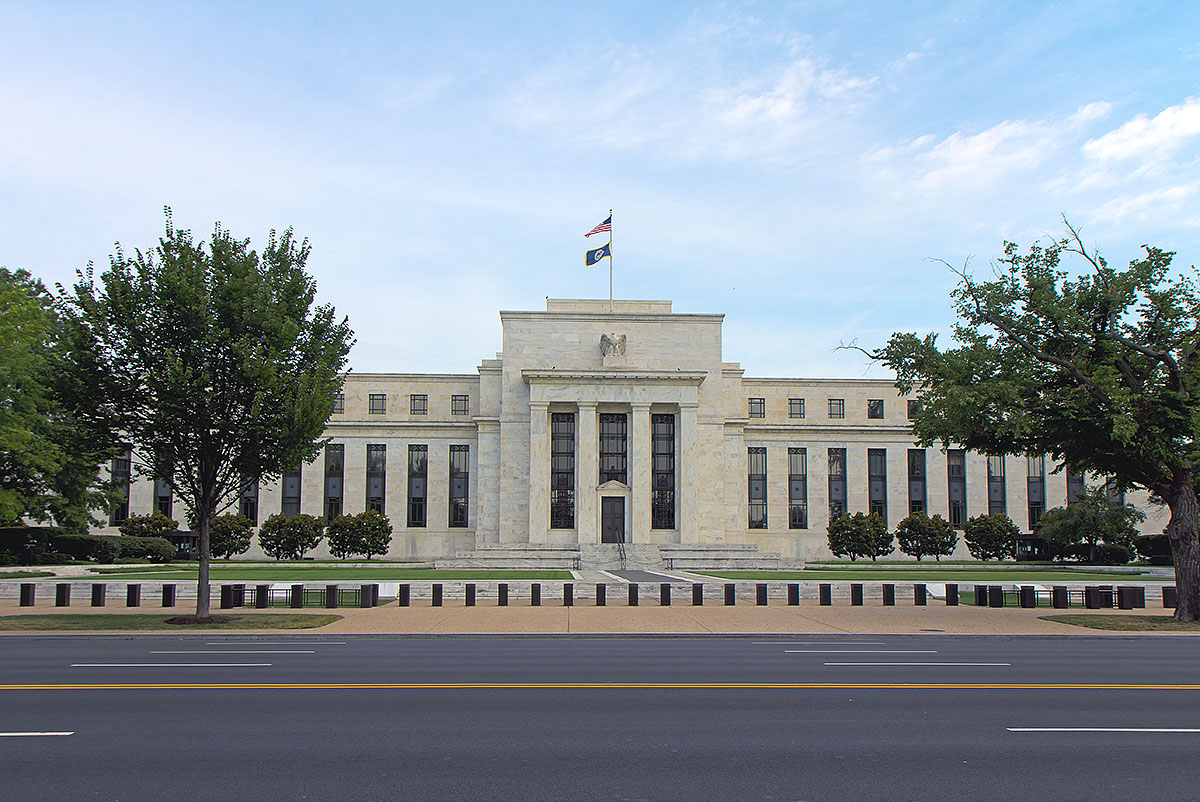
Quantitative tightening (QT) is how the Federal Reserve drains money from the financial system by shrinking its balance sheet, and after three and a half years it just ended. Here is what QT is, how it moves stocks and bonds, and what the post-QT era means for your portfolio in 2026.
What Is Quantitative Tightening (QT)?
Quantitative tightening (QT) is a monetary policy tool in which a central bank shrinks its balance sheet to reduce the amount of money circulating in the financial system. The Federal Reserve does this by letting the bonds it owns - mostly U.S. Treasuries and agency mortgage-backed securities (MBS) - mature without buying new ones to replace them. As those bonds roll off, cash that was sitting in the banking system effectively disappears, tightening financial conditions.
Think of the Fed's balance sheet as a giant reservoir of liquidity. During quantitative easing (QE), the Fed fills the reservoir by creating new reserves and buying bonds. During quantitative tightening, it opens the drain and lets the water level fall. The goal is to unwind the extraordinary stimulus pumped into markets during crises like 2008 and the 2020 pandemic, and to help bring inflation back toward the Fed's 2% target.
QT is sometimes called "balance sheet normalization" or "balance sheet runoff." All three terms describe the same process: the central bank deliberately reducing the trillions of dollars in securities it accumulated during years of easy money. It is one half of how modern central banks manage liquidity, and understanding it is just as important as watching the headline interest rate decision.
Why "quantitative"?
The word "quantitative" refers to the quantity of money and bonds, not the price of money. Traditional monetary policy targets a price - the federal funds rate. QE and QT instead target quantities: how many bonds the central bank holds and how many reserves sit in the banking system. That is why QT can run in the background even while the Fed holds interest rates steady, as it did through most of 2024 and 2025.
QT vs QE: The Two Levers of the Fed's Balance Sheet
Quantitative easing and quantitative tightening are mirror images. QE is expansionary - it adds liquidity, lowers long-term yields, and supports asset prices. QT is contractionary - it removes liquidity, lets yields drift higher, and tends to act as a headwind for risk assets. The Fed uses QE in downturns and QT in recoveries when it wants to take the stimulus back out.
| Feature | Quantitative Easing (QE) | Quantitative Tightening (QT) |
|---|---|---|
| Balance sheet | Grows (Fed buys bonds) | Shrinks (bonds roll off) |
| System liquidity | Increases | Decreases |
| Bond yields | Pushed lower | Drift higher |
| Typical effect on stocks | Supportive (tailwind) | Restrictive (headwind) |
| When it's used | Recessions, crises, deflation risk | Recoveries, fighting inflation |
| U.S. dollar | Tends to weaken | Tends to strengthen |
This relationship matters for valuation. When the Fed suppresses long-term yields through QE, the discount rate investors apply to future earnings falls, which inflates the present value of growth stocks. QT does the reverse. If you want a refresher on how discount rates flow into valuation multiples, our guide on forward P/E versus trailing P/E shows why rate expectations move the multiple investors are willing to pay.
How Does Quantitative Tightening Actually Work?
QT is not the Fed dumping bonds onto the open market. That would be disruptive and could crash bond prices. Instead, the Fed uses a much gentler mechanism called passive runoff governed by monthly caps.
Every bond the Fed owns has a maturity date. When a Treasury bond matures, the government pays the Fed back the principal. Under normal "reinvestment" policy, the Fed would take that cash and buy a new bond, keeping its holdings flat. Under QT, the Fed simply lets a set dollar amount of that principal disappear each month instead of reinvesting it. The cash is extinguished, and bank reserves fall.
The role of monthly caps
The Fed sets a ceiling on how much it will let run off. During the 2022-2025 program, the caps started aggressive and were tapered over time:
- June 2022 launch: up to $95 billion per month - $60 billion in Treasuries and $35 billion in MBS.
- 2024-2025 taper: the Treasury cap was cut sharply, eventually down to just $5 billion per month, while the MBS cap stayed at $35 billion.
- Anything above the cap gets reinvested, so the runoff is smooth and predictable rather than lumpy.
Mortgage-backed securities behave differently from Treasuries because homeowners prepay mortgages when they refinance. With mortgage rates high through 2024 and 2025, prepayments slowed, so actual MBS runoff frequently came in below the $35 billion cap. That is one reason the Fed's MBS holdings have been stubbornly slow to shrink.
Where the money goes
When reserves fall, the effect ripples through money markets. Banks have fewer excess reserves, the supply of safe short-term assets tightens, and the "convenience yield" investors place on cash-like instruments rises. This is the plumbing that QT quietly tightens month after month, even when the headline policy rate does not move.
Why Do Central Banks Use QT?
If QT risks tightening financial conditions and rattling markets, why bother? There are three main reasons the Fed pursues quantitative tightening.
- To fight inflation. QT works alongside rate hikes to cool an overheating economy. Draining liquidity makes credit scarcer and more expensive, which slows spending and investment. When inflation runs hot - as it has through the 4%+ CPI prints of 2026 - QT reinforces the Fed's tightening campaign.
- To rebuild "policy space." A bloated balance sheet leaves the Fed little room to act in the next crisis. By shrinking holdings during good times, the Fed restores its ability to launch fresh QE when the next recession hits.
- To reduce market distortions. Years of QE arguably inflated asset prices and compressed risk premiums. Normalizing the balance sheet lets markets price risk more naturally and reduces the Fed's enormous footprint in the Treasury and mortgage markets.
The trade-off is that QT and rate hikes together can over-tighten. The 2022 combination of aggressive rate increases and balance-sheet runoff produced the tightest financial conditions since 2008, contributing to a brutal year for both stocks and bonds. Recognizing the difference between a routine pullback and something deeper matters here - our explainer on a correction versus a bear market breaks down the thresholds.
The History of QT: 2017-2019 vs 2022-2025
The Fed has now run two full quantitative tightening programs. Comparing them shows how much the central bank learned from its first, painful attempt.
| Feature | QT1 (2017-2019) | QT2 (2022-2025) |
|---|---|---|
| Start | October 2017 | June 2022 |
| End | August 2019 (forced) | December 2025 (planned) |
| Peak monthly pace | ~$50 billion | ~$95 billion |
| Total reduction | ~$700 billion | Over $2.2 trillion |
| How it ended | Repo crisis forced a stop | Orderly wind-down as reserves hit "ample" |
| Market impact | Underestimated; sharp Q4 2018 selloff | Larger announcement effects on yields |
QT1 ran from October 2017 to August 2019 and removed roughly $700 billion. The Fed's leadership at the time famously described balance-sheet runoff as something that would be like "watching paint dry" in the background. Markets disagreed: the fourth quarter of 2018 saw the S&P 500 plunge nearly 20%, and the program ended abruptly in 2019 when money markets seized up.
QT2 was nearly twice as fast at its peak and ran far longer, shrinking the balance sheet by more than $2.2 trillion - roughly $1.6 trillion of Treasuries and $600 billion of MBS. Crucially, the Fed designed QT2 to end gracefully, tapering the pace in 2025 and stopping before reserves became dangerously scarce. The contrast between these two episodes is the single most important lesson in modern balance-sheet policy.
The 2019 Repo Crisis: When QT Went Too Far
The defining cautionary tale of quantitative tightening happened in September 2019. As QT1 drained reserves out of the banking system, the supply of cash available for overnight lending in the repurchase agreement ("repo") market got too thin. The result was a violent spike: overnight repo rates jumped from around 2% to as high as 10% in a matter of hours.
The repo market is the financial system's plumbing - it is where banks, hedge funds, and money-market funds borrow cash overnight against safe collateral like Treasuries. When repo rates explode, it signals that cash has become scarce and the gears of finance are grinding. The Fed was forced to step in with emergency liquidity injections and effectively ended QT1 on the spot, restarting balance-sheet growth within weeks.
The episode taught the Fed a permanent lesson: reserves can look abundant right up until the moment they become scarce. The transition from "ample" to "scarce" is non-linear and can trigger sudden stress. This is why, during QT2, the Fed watched money-market indicators obsessively and chose to stop the program in late 2025 the moment overnight funding markets began to show strain - long before a 2019-style blowup could occur.
How QT Affects Stocks, Bonds, and Your Portfolio
QT is not just a plumbing exercise for central bankers. It touches nearly every asset class. Here is how quantitative tightening tends to ripple through markets.
Bonds and yields
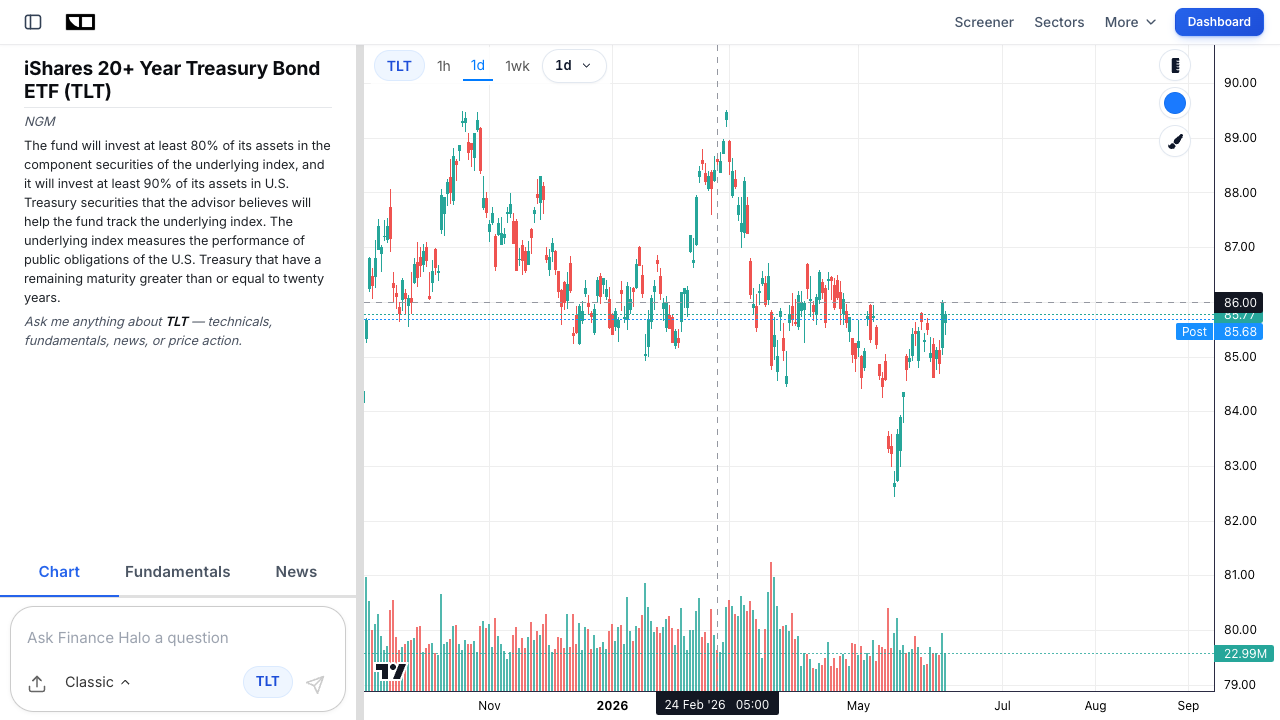
When the Fed stops buying Treasuries and lets them roll off, it removes a huge, price-insensitive buyer from the market. With less demand, bond prices fall and yields rise, all else equal. Research on QT episodes since 2017 found that QT "surprises" had larger and more persistent effects on Treasury yields than QE surprises did. Long-duration bond funds like the iShares 20+ Year Treasury Bond ETF (TLT) are especially sensitive to this dynamic.
Stocks and the portfolio rebalancing effect
QT influences equities mainly through the portfolio rebalancing effect. As QT lifts yields, safer bonds start offering more competitive returns, and investors rotate out of riskier assets to capture them. Higher discount rates also compress the present value of distant future earnings, which hits high-multiple growth and technology stocks harder than cheap, cash-generating value names. The Nasdaq's repeated swoons during the 2022 tightening campaign were a textbook example.
The U.S. dollar and the broader picture
Tighter dollar liquidity tends to support the U.S. dollar, which can pressure commodities, emerging-market assets, and the earnings of large U.S. exporters. For globally diversified investors, this is one more reason to think about geography - a theme we explore in our comparison of the MSCI World versus the S&P 500.
| Asset class | Typical QT effect | Why |
|---|---|---|
| Government bonds | Prices down, yields up | Fed steps back as a buyer; supply pressure rises |
| Growth stocks | Headwind | Higher discount rate compresses future earnings value |
| Value / dividend stocks | Relatively resilient | Near-term cash flows less sensitive to discount rate |
| U.S. dollar | Stronger | Tighter dollar liquidity, higher real yields |
| Gold & risk assets | Mixed to negative | Higher real yields raise the opportunity cost of holding |
Because QT acts on overall market sentiment and liquidity, it pays to keep an eye on the macro backdrop and how fearful or greedy the market is at any moment.
QT Has Ended: What the 2026 Balance Sheet Looks Like Now
Here is the news many investors missed: the Fed officially ended QT on December 1, 2025. After announcing the decision at its October 29, 2025 meeting, the FOMC stopped letting securities run off, judging that bank reserves had finally declined to "efficient and effective" levels under its ample-reserves framework.
By mid-2026, the Fed's balance sheet had shrunk from a 2022 peak near $8.9 trillion to roughly $6.7 trillion. As of June 2026, that total breaks down into about $4.48 trillion of Treasuries, $1.97 trillion of mortgage-backed securities, and $0.28 trillion of other holdings. Notably, the Fed reversed only about half of the pandemic-era balance-sheet expansion before calling it quits.
The ample-reserves framework
The Fed now operates an ample-reserves regime. Rather than starving the system of reserves to control rates (the pre-2008 "scarce reserves" model), it keeps reserves abundant and steers the policy rate using administered tools. Once reserves hit the "ample" sweet spot in late 2025 - and money markets started flashing early warning signs - the Fed had every reason to halt the runoff and avoid a repeat of 2019.
What comes after QT?
Ending QT does not mean a return to QE. The Fed announced it would begin buying around $40 billion of Treasury bills per month through mid-April 2026, but this is "organic" growth designed to match the rising demand for reserves as the economy expands - not stimulus. Going forward, the balance sheet is expected to grow slowly in line with the economy. For investors, the key shift is that the multi-year liquidity headwind from QT has been removed, even as the Fed holds its policy rate steady at 3.50%-3.75% into its June 2026 meeting amid sticky 4.2% inflation.

To see how the macro backdrop, sector rotation, and market sentiment are shifting now that QT has ended, you can read today's AI-generated market intelligence report on the Finance Halo dashboard.
How to Position Your Portfolio Around QT and QE Cycles
You cannot control the Fed, but you can build a portfolio that is resilient across liquidity cycles. Here is a practical framework for thinking about QT and QE as an investor.
- Match duration to the cycle. When QT is actively draining liquidity and yields are rising, very long-duration bonds carry more price risk. When QT ends and the headwind fades, longer-duration bonds become more attractive as a way to lock in higher yields before any future cuts.
- Mind your equity style tilt. Tightening liquidity tends to favor profitable, cash-generating businesses over speculative, long-duration growth stories. You can use the Finance Halo stock screener to filter for companies with strong fundamentals, reasonable valuations, and healthy balance sheets.
- Do not try to time the exact turn. QT and QE shifts are announced with lead time, but the market often front-runs them. Trying to perfectly time liquidity inflection points is a losing game for most investors.
- Keep contributing through the cycle. Steady, automatic investing smooths out the volatility that QT can create. Our deep dive on dollar-cost averaging versus lump-sum investing shows why consistency usually beats market timing.
- Hold some dry powder. Because QT can trigger sudden liquidity squeezes, a modest cash buffer lets you buy quality assets when others are forced to sell.
Investors worried about overlapping risks - tight liquidity plus geopolitical or inflation shocks - may also want to review our playbook on how to hedge a portfolio against geopolitical risk, since QT amplifies the impact of external shocks.
Common Mistakes Investors Make About QT
- Confusing QT with rate hikes. They are separate tools. The Fed can hold rates flat while QT runs in the background, or end QT while keeping rates restrictive - exactly what it did in 2025-2026. Watch both levers, not just the headline rate.
- Assuming QT instantly crashes stocks. QT is a slow-moving headwind, not a switch. Markets can rise during QT if earnings and the economy are strong. It is one input among many, not a sell signal on its own.
- Ignoring the balance sheet entirely. Many retail investors track only the federal funds rate. But liquidity - driven by the balance sheet - is a powerful force on asset prices that hides in plain sight.
- Believing the end of QT means QE is back. Stopping the runoff is neutral, not stimulative. The Fed's modest T-bill purchases in 2026 are about matching reserve demand, not juicing markets.
- Treating all stocks the same. QT hits speculative, unprofitable growth names far harder than cheap, dividend-paying value stocks. Style and quality matter enormously in a tightening regime.
- Panicking over money-market headlines. Brief repo-rate spikes around quarter-end are common and usually benign. The 2019 crisis was an extreme that the Fed now actively guards against.
Frequently Asked Questions
What is quantitative tightening in simple terms?
Quantitative tightening is when a central bank shrinks its balance sheet by letting the bonds it owns mature without replacing them. This pulls money out of the financial system, tightens credit, and helps cool inflation. It is the opposite of quantitative easing, where the central bank prints money to buy bonds.
Is quantitative tightening still happening in 2026?
No. The Federal Reserve ended its quantitative tightening program on December 1, 2025, after shrinking its balance sheet by more than $2.2 trillion. The Fed stopped because bank reserves had fallen to "ample" levels and money markets were beginning to show signs of strain. The balance sheet now grows slowly to match reserve demand.
How does QT affect the stock market?
QT tends to be a headwind for stocks because it drains liquidity and pushes bond yields higher, which raises the discount rate applied to future earnings. High-growth technology stocks are usually hit hardest, while cheaper value and dividend stocks tend to be more resilient. That said, strong earnings can override the QT headwind.
What is the difference between QT and raising interest rates?
Raising interest rates targets the price of money - the federal funds rate. QT targets the quantity of money and bonds in the system by shrinking the balance sheet. They are independent tools, and the Fed can use them in different combinations, such as ending QT while still holding rates at a restrictive level.
Why did the Fed stop quantitative tightening?
The Fed stopped QT once bank reserves declined to levels it judged "ample," and because overnight funding markets started signaling that cash was getting tight. Having learned from the 2019 repo crisis - when reserves became scarce and repo rates spiked from 2% to 10% - the Fed chose to halt the runoff well before a similar blowup could occur.
Does the end of QT mean quantitative easing is coming back?
Not necessarily. Ending QT is a neutral move - it simply stops the balance sheet from shrinking. The Fed's small Treasury-bill purchases in early 2026 are meant to match the natural growth in demand for reserves, not to stimulate the economy. A true return to QE would require a fresh crisis or recession.
What assets benefit when QT ends?
When QT ends, the liquidity headwind fades, which is generally supportive for risk assets broadly. Longer-duration bonds can become more attractive, and rate-sensitive growth stocks often get relief as the threat of ever-tightening conditions recedes. The exact reaction depends on why QT ended and what the economy is doing.
Conclusion
Quantitative tightening is one of the most powerful yet least understood levers in modern monetary policy. By letting bonds roll off its balance sheet, the Federal Reserve quietly drained more than $2.2 trillion of liquidity from the financial system between 2022 and 2025 - a force that pressured bond prices, lifted yields, and weighed on the most speculative corners of the stock market.
The three things to remember: QT is the mirror image of QE and works through gradual, capped runoff rather than outright selling; it tends to tighten financial conditions and hit long-duration growth stocks hardest; and the 2019 repo crisis taught the Fed to stop before reserves get scarce, which is exactly why QT ended in December 2025. With the balance sheet now near $6.7 trillion and the liquidity headwind removed, the macro backdrop for 2026 looks meaningfully different than it did during the tightening years. Understanding where we are in the liquidity cycle - QE, QT, or neutral - gives you a real edge in positioning your portfolio.
Try it yourself: Use Finance Halo's AI assistant to get instant analysis on any stock, ETF, or macro question. Just type a ticker and ask how the end of QT and the Fed's 2026 stance could affect it.
Disclaimer: This article is for educational purposes only and does not constitute investment advice. Always do your own research before making investment decisions.