
How to Hedge Your Portfolio Against Geopolitical Risk
6/10/2026

Learning how to hedge your portfolio against geopolitical risk is the difference between sleeping through a crisis and panic-selling at the bottom. With war in the Middle East, oil spiking, and gold at record highs in June 2026, here is the practical playbook every investor should have ready before the next shock hits.

What Is Geopolitical Risk in Investing?
Geopolitical risk is the chance that political conflict between nations - war, sanctions, coups, trade embargoes, terrorism, or the sudden closure of a critical trade route - will damage the value of your investments. Unlike a normal earnings miss, a geopolitical shock is exogenous: it comes from outside the market and is almost impossible to forecast on a calendar.
What makes these events dangerous for a portfolio is not just the headline, but the second-order effects. A regional conflict can spike oil prices, reignite inflation, force a central bank to keep rates higher for longer, and drain liquidity from risk assets all at once. The June 2026 escalation in the Middle East is a textbook case: a single supply scare pushed Brent crude up double digits, helped drive U.S. CPI to a three-year high of 4.2%, and sent the Dow down nearly 900 points in a session.
The goal of hedging is not to predict the next crisis. It is to own a handful of assets that tend to rise or hold steady precisely when your stocks fall, so the overall portfolio drawdown stays survivable and you are never forced to sell good companies at the worst possible price.
Geopolitical risk vs. market risk
Ordinary market risk (a recession, a rate hike, a sector rotation) usually telegraphs itself and unwinds gradually. Geopolitical risk is binary and fast. That distinction matters because hedges that work for a slow bear market - like simply rotating to value - often react too slowly to protect you in a 48-hour conflict shock. For a refresher on the broader categories of decline, see our guide to the difference between a correction and a bear market.
How Do Markets Actually React to Geopolitical Shocks?
Here is the counterintuitive truth that should anchor every hedging decision: markets recover from most geopolitical shocks far faster than investors expect. Decades of data show the average pullback is shallow and short-lived, because equities price in the conflict quickly and then refocus on earnings and rates.
Studies of post-World War II events find an average peak-to-trough drawdown of roughly 5% (one widely cited figure is -4.7%), with the market reaching its bottom in about 19 trading days and fully recovering its losses in about 42 days. In 19 of 20 major military conflicts studied, the S&P 500 was back to even within roughly a month, and median six-month returns after a shock have been positive at over 5%.
| Pattern after a major geopolitical shock (post-WWII averages) | Figure |
|---|---|
| Average peak-to-trough S&P 500 drawdown | ~5% (about -4.7%) |
| Average trading days to the bottom | ~19 days |
| Average trading days to full recovery | ~42 days |
| Conflicts that recovered within ~1 month | 19 of 20 |
| Median 6-month return after the shock | +5% or more |
But averages hide an important exception. The depth of the decline depends heavily on the type of event. Energy-supply disruptions - exactly the kind triggered when a conflict threatens the Strait of Hormuz, through which roughly 20% of the world's oil flows - historically cause the deepest and most prolonged drawdowns. That is because they do lasting macro damage: higher oil feeds inflation, which forces tighter policy, which compresses valuations. So the hedging question is really, "Is this a quick headline shock, or an energy and inflation shock with a long tail?"
Why Do Most Investors Get Hedging Wrong?
The single most expensive mistake is hedging reactively. By the time a conflict is on the front page, gold has already jumped, put options have re-priced to crisis levels, and defense stocks have gapped up. Buying protection then means paying a premium for insurance on a house that is already on fire.
Three behavioral traps trip up most investors:
- Panic-selling the whole portfolio. Because shocks recover quickly, dumping equities into the dip locks in a loss and usually means buying back higher.
- Over-hedging permanently. Holding 40% gold and cash "just in case" caps your long-run returns far more than the occasional crisis ever would.
- Confusing diversification with hedging. Owning 30 tech stocks is not diversification when a single macro shock drags them all down together.
A real hedge is built in advance, sized modestly, and held as a permanent sleeve of the portfolio so it is already in place when the shock arrives. Think of it like a seatbelt: you fasten it before the crash, not during.
Is Gold Still the Best Geopolitical Hedge?
For most retail investors, gold remains the cleanest and most reliable geopolitical hedge. It has no counterparty, it is no one's liability, and it has a centuries-long record of holding purchasing power when fiat currencies and equities wobble. In the June 2026 risk-off wave, gold pushed above record territory toward the $5,400 level even as stocks and crypto sold off hard.
The easiest way to own it is through a physically backed ETF such as the SPDR Gold Shares (GLD), which trades like a stock and tracks the bullion price closely. Legendary investor Ray Dalio has long argued for a 5% to 15% gold allocation as a structural piece of any portfolio, and in 2026 Goldman Sachs explicitly named gold ETFs among its favored positions for navigating instability.
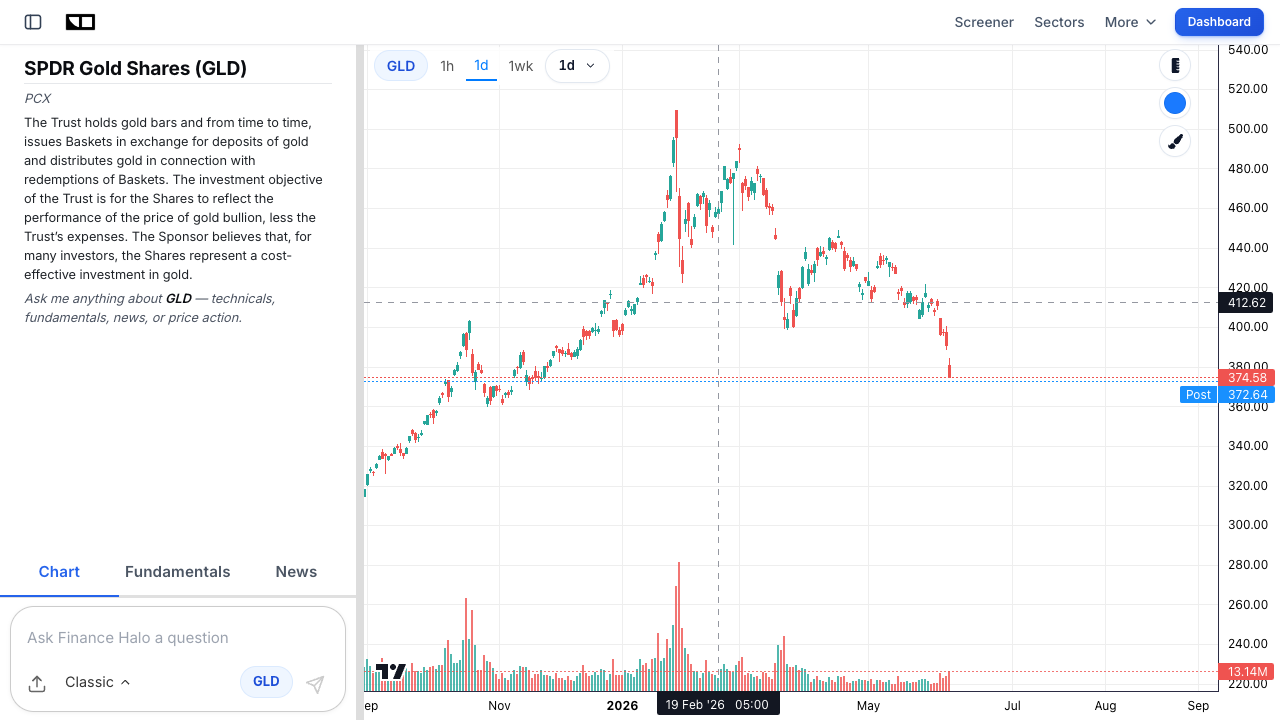
How gold actually cushions a drawdown
The point of a gold sleeve is correlation, not just appreciation. When equities fall and gold rises, the blended portfolio return is simply the weighted average of the two. If we call the stock weight and return and , and the hedge weight and return and , the portfolio return is:
With a 10% gold sleeve, a day where stocks drop 5% but gold rises 3% turns a pure-equity -5% into roughly -4.2% - and across a multi-week crisis that gap compounds into meaningfully less pain and far less temptation to sell. Gold does not eliminate the drawdown; it shrinks it and steadies your hand.
Defense and Aerospace Stocks
If gold hedges the fear, defense and aerospace stocks hedge the spending. Conflict and rising global tension drive multi-year increases in government defense budgets, and that revenue stream is relatively insulated from the risk-on/risk-off swings that whipsaw the rest of the market. In 2026, Morgan Stanley urged investors to overweight defense and aerospace, calling the sector a multi-year beneficiary of structurally higher military spending.
Investors can get exposure two ways:
- A sector ETF such as the iShares U.S. Aerospace & Defense ETF (ITA) for diversified, one-ticket exposure.
- Individual primes like Lockheed Martin (LMT), RTX Corporation (RTX), and Northrop Grumman (NOC), which book long-dated government contracts.
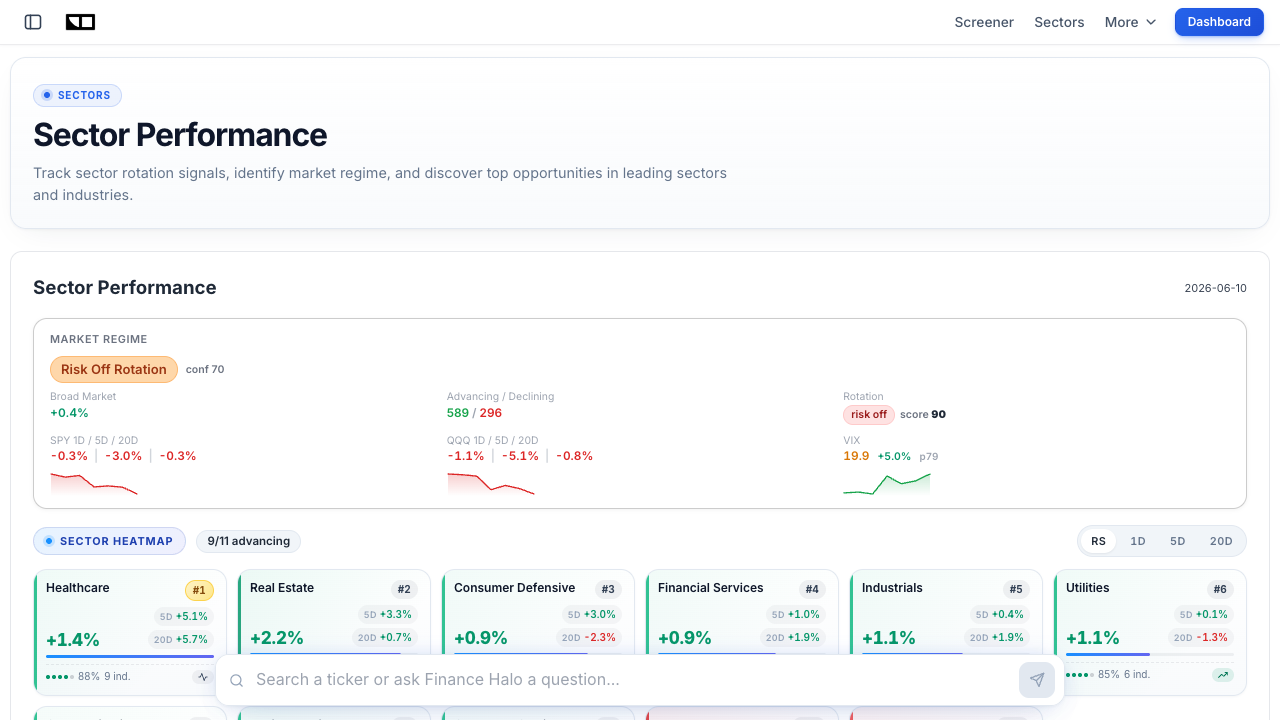
The catch: defense names tend to be a hedge against sustained tension, not a one-day spike. They also re-rate quickly once a headline hits, so the value is in owning them before the cycle, as a permanent satellite position, rather than chasing them after a 10% pop. Watching where money is flowing across the market is easier on a live sector performance and rotation dashboard.
Treasuries and Cash: Portfolio Ballast
The most underrated hedge is the most boring one: high-quality government bonds and plain cash. When equities sell off in a flight to safety, money often flows into U.S. Treasuries, pushing their prices up and offering both capital appreciation and a stabilizing ballast for the portfolio.
There is, however, a crucial nuance for 2026. The classic stock-bond hedge works best when the shock is deflationary. When the shock is inflationary - an oil-driven price spike that keeps the Fed hawkish - long-dated bonds can fall alongside stocks. That is why duration choice matters:
| Instrument | Role in a geopolitical shock | Example ticker |
|---|---|---|
| Long-duration Treasuries | Best in a deflationary, flight-to-safety shock; vulnerable if inflation spikes | TLT |
| Short-duration Treasuries / T-bills | Capital preservation with yield; low rate sensitivity | BIL |
| Inflation-protected bonds (TIPS) | Hedge the inflation tail of an energy shock | TIP |
| Cash / money market | Optionality - dry powder to buy the dip | - |
Goldman Sachs specifically favored inflation-protected Treasuries in 2026 precisely because the dominant risk was an energy-driven inflation shock rather than a clean deflationary one. A 5-10% allocation to short-duration Treasuries or T-bills is the simplest way to hold dry powder that earns a yield while you wait.
Energy and Commodities
Here is an elegant truth: the asset that causes the most portfolio damage in a Middle East conflict is also one of the best hedges against it. Energy equities and commodities rise when supply is threatened, directly offsetting the inflation drag that hurts the rest of your holdings.
When the June 2026 conflict raised fears over the Strait of Hormuz, Brent crude jumped roughly 13% to multi-month highs. A modest sleeve of energy exposure - through a broad energy ETF like the Energy Select Sector SPDR (XLE) - lets your portfolio capture some of that upside. Think of it as owning a piece of the very thing driving the inflation that is hurting your other positions.
The trade-off is that energy is volatile and cyclical. When the conflict premium fades, oil can fall as fast as it rose, so energy is a tactical hedge to size carefully rather than a permanent overweight.
Safe-Haven Currencies
Currencies are the most overlooked geopolitical hedge for retail investors. In a global risk-off event, capital flows toward currencies perceived as stable stores of value - historically the U.S. dollar, the Swiss franc, and the Japanese yen. A stronger dollar also tends to act as a natural cushion for U.S.-based investors during a crisis.
You do not need a forex account to benefit. Simply holding cash in U.S. dollars is itself a safe-haven position, and the dollar's strength during stress is part of why short-duration Treasuries hedge so well. For investors who do trade currencies, the franc in particular has a long record of firming alongside gold when tensions flare. You can chart any pair, such as USD/CHF, and ask Finance Halo's AI assistant about the setup.
Building a Geopolitical Hedge: A Sample Allocation
So how do you put it together? The aim is a permanent hedging sleeve - typically 15-30% of the portfolio - that you hold through all weather, rebalancing back to target once or twice a year. Below are two illustrative frameworks: a conservative tilt for someone who prizes stability, and a balanced tilt for a long-term investor who wants protection without sacrificing much growth.
| Sleeve | Conservative hedge | Balanced hedge | What it protects against |
|---|---|---|---|
| Core equities | 60% | 75% | Long-run growth engine |
| Gold (e.g. GLD) | 15% | 8% | Currency & crisis fear |
| Defense / aerospace (e.g. ITA) | 8% | 5% | Sustained conflict & rising budgets |
| Short-duration Treasuries / TIPS | 12% | 8% | Ballast & inflation tail |
| Energy (e.g. XLE) | 5% | 4% | Oil & supply shocks |
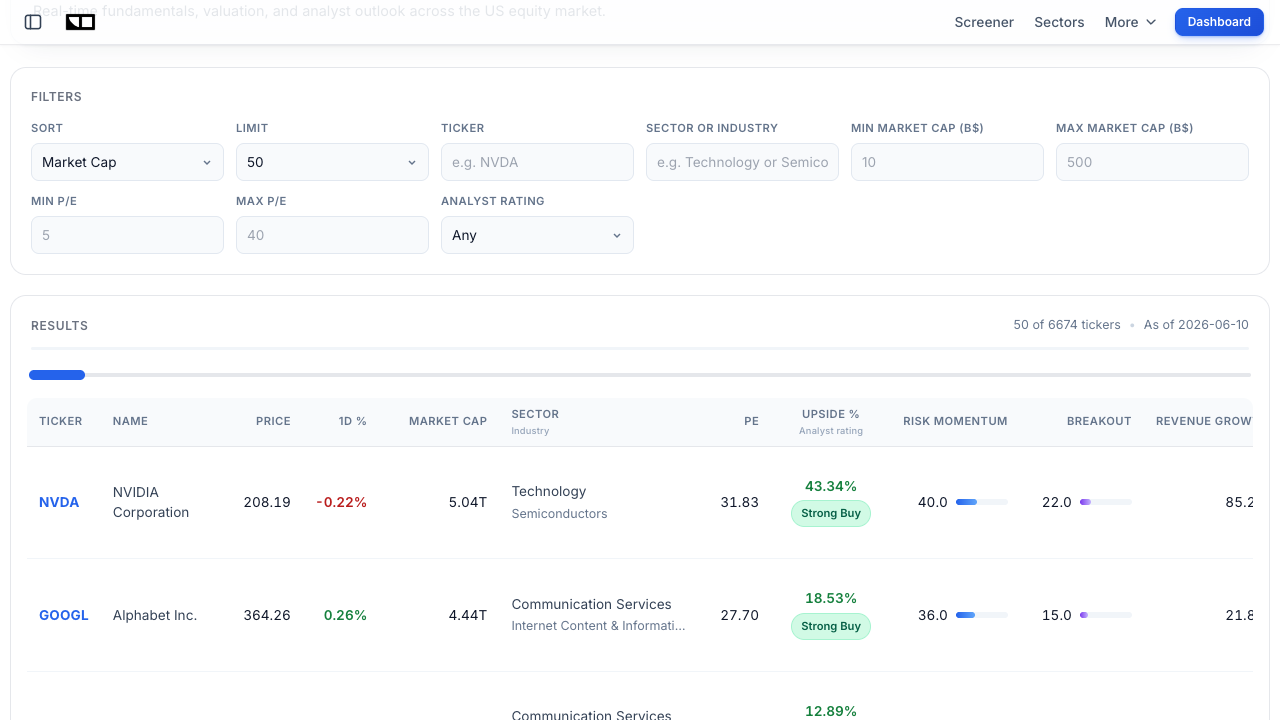
These are starting points, not prescriptions - your mix should reflect your time horizon and risk tolerance. To find specific holdings that fit each sleeve, you can filter by sector, market cap, and valuation on the Finance Halo market screener, then pressure-test each candidate the way our guide to analyzing a stock before buying lays out.
Rebalancing is the hidden edge
The discipline that makes a hedge profitable rather than just defensive is rebalancing. When a crisis sends gold and defense up while equities fall, rebalancing forces you to trim the winners and buy the beaten-down stocks - the systematic version of "buy low, sell high." It removes emotion from the exact moment emotion is most dangerous. If you struggle to deploy cash during scary moments, our comparison of dollar-cost averaging vs. lump-sum investing shows why a rules-based plan beats waiting for the "all clear."
Real-World Example: The June 2026 Iran Shock
Consider two investors heading into June 2026, each with a $100,000 portfolio, as the Middle East conflict escalated, oil spiked, and CPI hit a three-year high of 4.2%.
Investor A held 100% U.S. equities. When the Dow fell nearly 1.9% in a single session and the broader selloff deepened, the portfolio dropped sharply, the headlines worsened, and Investor A sold near the lows to "stop the bleeding" - converting a temporary paper loss into a realized one and missing the snap-back that historically follows within weeks.
Investor B held the balanced hedge from the table above: 75% equities, 8% gold, 5% defense, 8% short Treasuries, 4% energy. As stocks fell, the gold sleeve rallied toward record highs near $5,400, energy jumped with Brent's ~13% spike, and defense names firmed on rising-budget expectations. The blended drawdown was materially shallower, Investor B never felt forced to sell, and the scheduled rebalance actually had them buying cheap equities with the appreciated hedge assets.
Same shock, two completely different outcomes - driven not by forecasting the conflict, but by owning the hedges before it began. You can follow the live macro backdrop, market sentiment, and sector setup behind episodes like this on the Finance Halo market intelligence dashboard.
Common Mistakes to Avoid
- Hedging only after the headline: protection is cheapest when nobody wants it. Build the sleeve during calm markets, not mid-crisis. Fix: set target weights now and hold them permanently.
- Panic-selling the whole portfolio: since most shocks recover in weeks, dumping equities locks in the loss. Fix: let your hedges do their job and stick to your rebalance schedule.
- Treating gold as a trade: chasing gold after a 20% run often means buying the top. Fix: hold a fixed 5-15% sleeve through the cycle instead of timing it.
- Using long bonds as your only hedge in an inflation shock: long-duration Treasuries can fall with stocks when inflation spikes. Fix: favor short-duration bonds and TIPS when the risk is energy-driven inflation.
- Confusing concentration with diversification: ten correlated tech stocks all fall together. Fix: hedge across truly different assets - metals, defense, bonds, energy, currencies.
- Over-hedging: a permanent 40% in cash and gold guarantees you underperform over decades. Fix: cap the hedging sleeve at roughly 15-30% and let equities compound.
Frequently Asked Questions
What is the best hedge against geopolitical risk?
There is no single perfect hedge. Gold is the most reliable all-purpose option because it has no counterparty and rises in most crises, but a complete hedge layers gold with defense stocks, short-duration Treasuries or TIPS, a little energy, and cash. Each covers a different failure mode - fear, sustained conflict, inflation, and supply shocks.
How much of my portfolio should I allocate to hedges?
A common framework is a permanent hedging sleeve of about 15-30% of the portfolio, with gold often at 5-15% (a range investors like Ray Dalio have long advocated) and the rest split across defense, bonds, and energy. Conservative investors sit at the higher end; long-term growth investors at the lower end.
Should I sell my stocks when a war breaks out?
Usually no. Historically the S&P 500 falls only about 5% on average after a geopolitical shock and recovers within roughly six weeks, so selling into the panic tends to lock in losses and miss the rebound. A pre-built hedge lets you hold your equities through the storm instead.
Does gold always go up during geopolitical crises?
Not always, but it rises more often than not because investors treat it as a safe store of value. In June 2026, gold pushed to record highs near $5,400 as conflict escalated. That said, gold can stall or dip if real interest rates jump sharply, which is why it is one hedge among several, not the only one.
Are defense stocks a good long-term hedge?
Defense and aerospace stocks hedge sustained tension and rising government budgets rather than one-day spikes. Analysts at firms like Morgan Stanley have framed the sector as a multi-year beneficiary of structurally higher military spending, but the names re-rate quickly on news, so they work best held in advance as a satellite position.
How is hedging different from diversification?
Diversification spreads risk across many holdings that may still fall together in a shock. Hedging deliberately adds assets that are negatively or weakly correlated with your core - so they hold up or rise exactly when your stocks drop. You need both, but only true hedges protect you in a fast crisis.
Can I hedge geopolitical risk with just ETFs?
Yes. A retail investor can build a full hedge using liquid ETFs alone - for example a gold ETF, a defense ETF, a short-Treasury or TIPS ETF, and an energy ETF - without needing options, futures, or a forex account. ETFs keep the hedge simple, cheap, and easy to rebalance.
Conclusion
Knowing how to hedge your portfolio against geopolitical risk comes down to three durable ideas. First, most shocks are shallow and short - the S&P 500's average post-WWII drawdown is only about 5% with recovery in roughly six weeks - so the real enemy is panic, not the headline. Second, build the hedge before the crisis, as a permanent 15-30% sleeve spread across gold, defense, short-duration bonds, energy, and cash, because protection bought mid-panic is protection bought at a premium. Third, rebalance with discipline so that a crisis becomes an opportunity to buy cheap equities rather than a reason to sell them.
The June 2026 Middle East shock - record gold near $5,400, oil spiking on Strait of Hormuz fears, and CPI at a three-year high - is a live reminder that the next shock always arrives without an invitation. Investors who set their hedges in calm weather get to ride it out; those who wait pay full price for the seatbelt after the crash. Decide your target weights today, not on the day the headlines hit.
Try it yourself: Use Finance Halo's AI assistant to stress-test any hedge idea - just type a ticker like GLD, ITA, or TLT and ask how it has behaved in past crises, or check today's macro setup on the market intelligence dashboard.
Disclaimer: This article is for educational purposes only and does not constitute investment advice. Always do your own research before making investment decisions.